

Precious stones
Precious stones
Gemstones bring the colors and history of the earth into our jewelry. Each stone has its own unique character, shaped by nature and highlighted through cutting and craftsmanship.
At Heindorf, we work primarily with natural, untreated gemstones, which we select based on color, luster, quality, and character. We appreciate their diversity and the interplay between the stone, the metal, and the person who will wear the piece of jewelry.
A natural gemstone is formed in nature. It may be untreated or may have undergone a treatment that enhances its color or improves its clarity. Origin and treatment are different characteristics, both of which can be important when choosing your gemstone.
Here you can explore the gemstones we work with and read about their formation, history, and role in our craftsmanship.

The diamond captures the light and reflects it back in brilliant flashes of all the colors of the rainbow. Formed deep within the earth and shaped through cutting, it becomes a radiant element in the piece of jewelry—and a personal symbol of love, strength, or a meaningful moment.
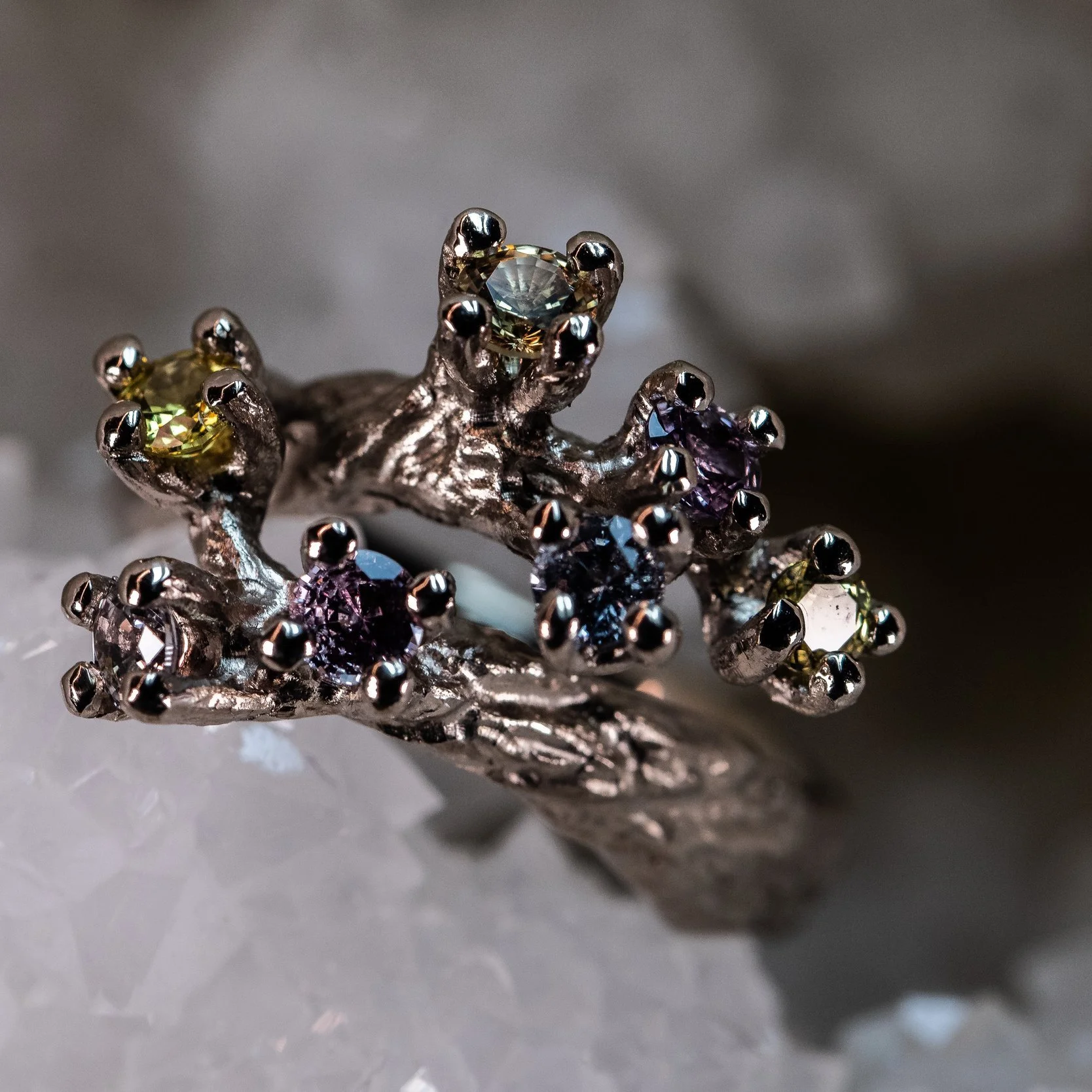
Sapphires come in a wide variety of colors, ranging from delicate pink and golden yellow to green and deep blue. Each stone has its own character and opens up new possibilities when paired with gold, silver, and the design of the jewelry. At Heindorf, we particularly appreciate the natural play of colors in untreated sapphires.
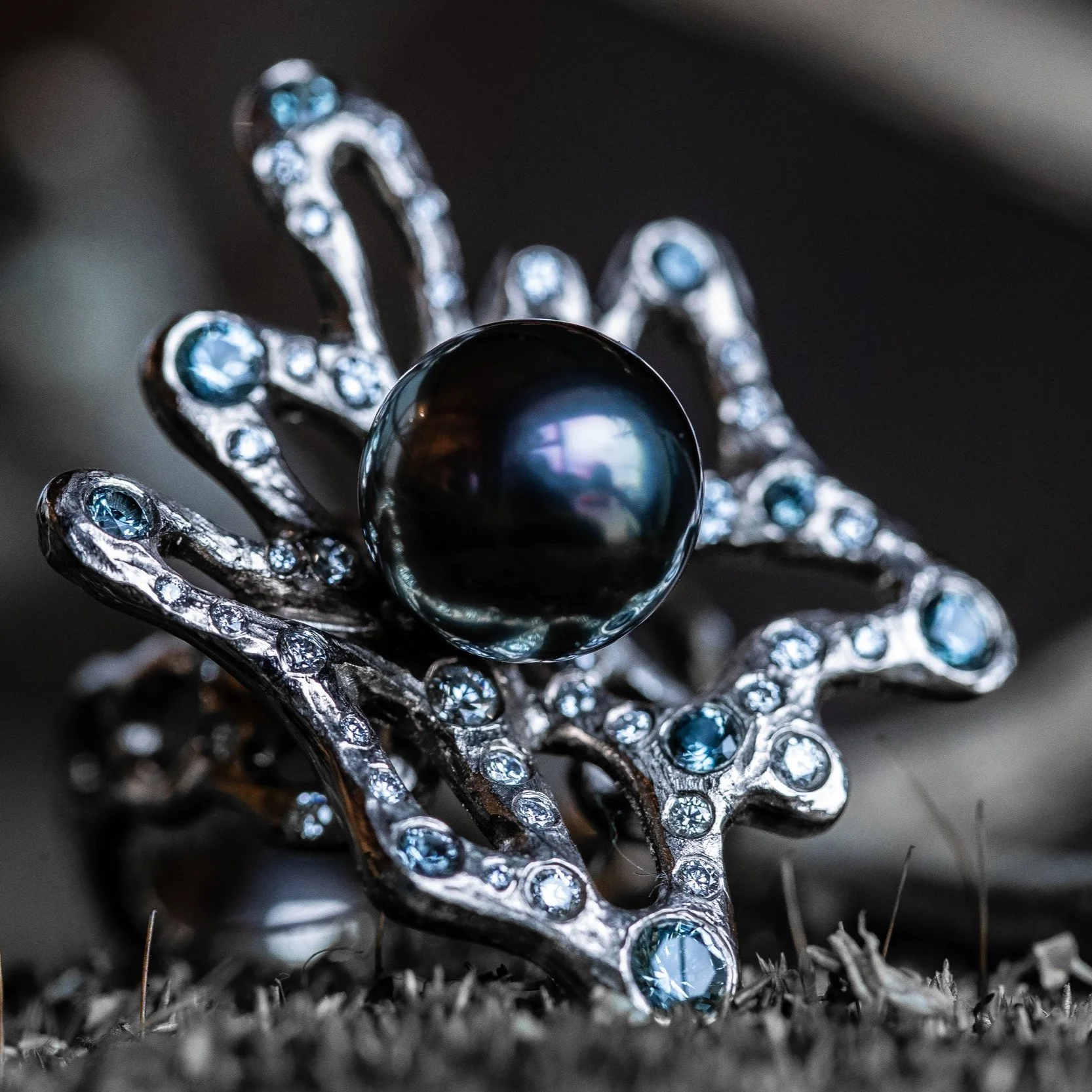
From delicate pinks and intense reds to violet, blue, and subtle shades of gray, spinel offers a fascinating play of colors. Throughout history, it was mistaken for ruby and sapphire. Today, it is prized for its own beauty—a star with millions of years under its belt.
The ruby’s red glow evokes associations with love, vitality, and the beating heart. It has been admired for centuries and can give even a small piece of jewelry a vibrant focal point. At Heindorf, we work with rubies from Greenland, among other sources.

Like the shimmering northern lights and deep volcanic lakes, the green hues of the emerald dance. Its luster and internal patterns give the stone depth and character. In our jewelry, this green gemstone meets organic forms and stories of nature, growth, and renewal.

Greenlandic rubies tell the story of the earth’s primal power and the raw beauty of the North.
Each stone possesses a unique depth of color and energy, lending the jewelry a truly distinctive character.
Greenlandic Rubies

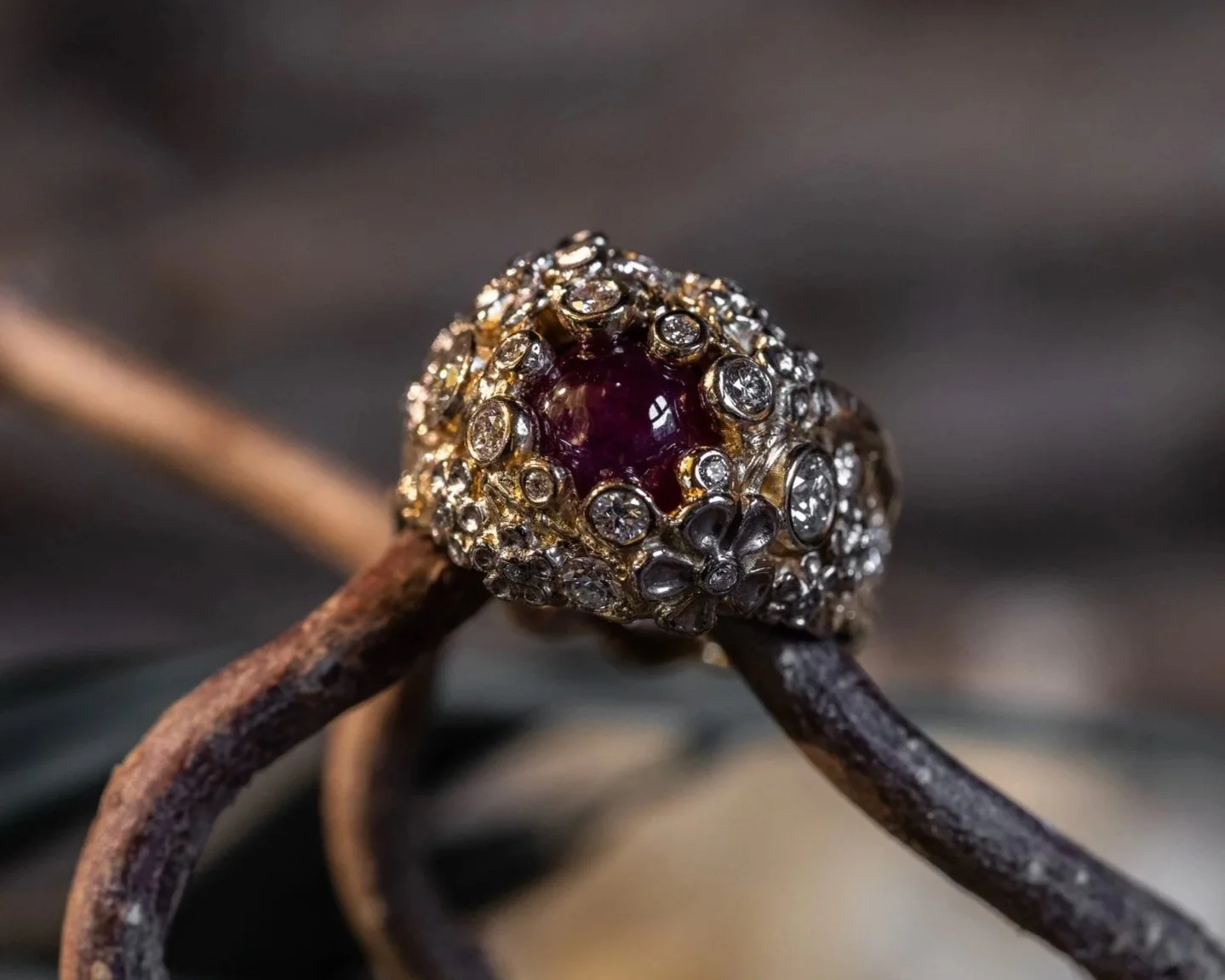

Lecture on Gemstones
These magnificent stones from the Earth’s core are eternal reminders of our planet’s creation. In a riot of colors, the gemstones sparkle, bringing us beauty and joy. There is a stone for every person and every mood. In many cultures, their colors and shapes have been imbued with symbolic meaning. This adds a personal touch for the owner—but also for the generous giver.
We regularly host lectures at the workshop, covering a variety of topics and featuring different speakers. These may focus on gold, diamonds, rubies, sapphires, pearls, or whatever is currently in the spotlight. The speaker might be the goldsmith himself or one of our suppliers, who will share stories about their travels, their work, and much more.
Sign up for our mailing list if you're interested in attending one of the lectures.
Materials and Suppliers
A piece of jewelry begins long before it takes shape in the workshop. Behind every gemstone lies a story about its formation in nature, its extraction, its cutting, and the people who have worked with it.
At Heindorf, we work with select suppliers and place a high priority on long-term relationships and dialogue about the materials. We are interested in where the stones come from, how they are processed, and what information accompanies them.
Information about origin, treatment, and traceability varies from stone to stone. Therefore, we base our assessment on the specific gemstone and the documentation available.
You're always welcome to ask about the materials used in a piece of jewelry. We're happy to share our knowledge and help you choose a stone whose quality and character match your preferences.
Gemstones with Character
Nature creates gemstones in a wide variety of colors and appearances. Some are clear and luminous, while others contain inclusions and color variations that give them a special depth.
We select the stones with an eye for both their quality and their character. The color, cut, and luster must complement the jewelry’s shape and the story it is meant to tell.
We are particularly fond of untreated gemstones, whose color and clarity have been preserved just as nature created them. We also work with treated natural stones, including Greenlandic rubies. The treatment is part of the stone’s history and influences how the ruby is evaluated and cared for.
For us, the fascination lies in each individual stone: its nuances, its light, and the possibilities it opens up in craftsmanship.
Diamonds – Light from the Earth's Core
There is something fascinating about the way a diamond interacts with light. Even the slightest shift in movement can cause the stone to cast clear flashes of light and reflect all the colors of the rainbow. It can be a quiet, glowing point in a piece of jewelry or a sparkling centerpiece that catches the eye.
At Heindorf, we love the way diamonds bring our organic shapes to life and highlight the small details—a glimmer of light among twigs, a star in a vaulted ceiling, or a radiant centerpiece in a personalized ring.
Created by nature
Natural diamonds are composed of carbon that has crystallized under high pressure and high temperature deep within the Earth. Many were formed billions of years ago and were later brought to the surface through volcanic processes.
Diamond is the hardest natural mineral on the Mohs scale. This makes it highly resistant to scratches and well-suited for jewelry that is worn throughout one’s life. However, hardness and toughness are different properties: A diamond can be damaged by an accidental impact and therefore also deserves careful handling.
Most people think of diamonds as colorless stones. Nature also creates diamonds in shades of yellow, brown, pink, blue, and green, among others. These colors result from various conditions within the crystal and give the stones vastly different appearances.
History and Significance
The name “diamond” has its roots in the Greek word adamas, which is associated with the invincible or unbreakable. For centuries, the diamond has been admired for its hardness, rarity, and unique luster.
It has become a symbol of love, strength, and enduring love. For some, it marks a promise between two people. For others, it is a reminder of an important event or an expression of something valuable within themselves.
At Heindorf, the meaning of a diamond is personal. It finds its place in the story of the piece of jewelry and in the life of which the jewelry becomes a part.

The Four Cs – Diamond Quality
Diamonds are evaluated, among other things, based on four characteristics known internationally as the four Cs: Carat, Color, Clarity, and Cut —weight, color, clarity, and cut. Together, they help describe the stone and its quality.
Carat – weight
A diamond's weight is measured in carats, abbreviated as ct. One carat is equal to 0.2 grams. Two diamonds of the same weight may appear to be different sizes because their shapes and proportions vary.
"Carat" for gemstones refers to weight, while "karat" for gold refers to the gold's purity.
Color – color
For diamonds on the standard D–Z color scale, the degree of colorlessness is evaluated. D is the highest color grade on this scale, which ranges from colorless to distinctly yellowish or brownish.
Diamonds with distinctive colors are graded according to different criteria, in which factors such as the color’s hue, intensity, and distribution are taken into account.
Clarity – clarity
Clarity describes a diamond’s internal inclusions and external characteristics. These are evaluated based on factors such as size, number, and location, typically under ten times magnification.
Many inclusions are so small that they are difficult to see with the naked eye. Clarity is one factor in assessing quality, while the diamond’s overall appearance also depends on its color and cut.
Cut – Grinding
The cut has a major impact on how the diamond captures and reflects light. Proportions, symmetry, and polish all work together to create the stone’s brilliance and play of color.
A diamond can be cut into many shapes: round, oval, pear, heart, marquise, and several others. The shape is part of the jewelry’s aesthetic, while the quality of the cut refers to how well the stone has been cut.
Diamond and Brilliant
"Diamond" is the name of the material, while "brilliant" refers to a cut. When people talk about a "brilliant" in a piece of jewelry, they usually mean a round brilliant-cut diamond with 57 or 58 facets.
A diamond can also have other cuts. The elongated emerald cut, for example, produces a subtle play of light with broad reflections, while the brilliant cut creates many small, lively sparkles.

Pink Diamonds – Rare Colors from Nature
Natural pink diamonds have a distinctive appearance, ranging from delicate pink tones to intense shades of pink. In the vast majority of cases, the color is caused by imperfections in the crystal structure, which alter the way the stone absorbs light.
For many years, the Argyle Mine in Australia was a major source of pink diamonds. The mine closed in 2020, and the stones from this mine continue to hold a special place among collectors and connoisseurs.
The value of a pink diamond depends, among other things, on its color, weight, clarity, cut, and documented origin. Rarity is part of its appeal, while market prices can both rise and fall.
At Heindorf, we’re happy to help you find a pink diamond whose color and clarity match the piece of jewelry you’ve been dreaming of.

Diamonds at Heindorf
We work with natural diamonds and select the stones with an eye for both quality and the overall jewelry design. In our collection, we use, among other things, colorless diamonds in the high color grades D–E and the clarity grade IF, which denotes diamonds with no visible internal inclusions under 10x magnification.
We can also help you choose other qualities, sizes, and cuts. The key is to find the diamond that suits your preferences, the jewelry’s design, and your budget.
We work with select suppliers and place great importance on open communication regarding the quality and origin of the stones, as well as the accompanying documentation. Information about origin and any treatments depends on the specific stone. When selecting larger or unique diamonds, we are happy to advise you on obtaining a gemmological report from an independent laboratory.
In the workshop, the diamond becomes part of the craftsmanship and the story. It can stand alone or interact with gold, silver, and colored gemstones—as a small piece of the Earth’s history that is brought to life in a personal piece of jewelry.

“A diamond is just a piece of coal that has held on to its dream.”
— Susse Wold, at one of our events at Heindorf

Sapphires—in all the colors of the rainbow
Sapphires open up a world of colors. From delicate pink and golden yellow to green, violet, and deep blue, they offer a variety that never ceases to amaze. Some have a soft and subtle appearance, while others shine with an intensity that immediately catches the eye.
At Heindorf, we love letting the color of the sapphire become part of the jewelry’s story. A small stone can change the entire mood and give a ring or necklace its own unique character.
Created by nature
Sapphires are varieties of the mineral corundum, which also includes rubies. The red variety is called a ruby, while the other colors are called sapphires. Small amounts of various elements and the crystal’s structure create the many shades.
Corundum has a hardness of 9 on the Mohs scale. This makes sapphire resistant to scratches and well-suited for jewelry that is worn frequently.
Sapphires are found in many places around the world. At Heindorf, we work with stones from Madagascar and Sri Lanka, among other places, where nature has created sapphires with a rich and varied play of colors.
A gemstone with a history
For centuries, the blue sapphire has been associated with royal jewelry and symbols of wisdom and fidelity. Its deep color evokes images of the sky and the sea.
The other colors evoke different moods and personal associations. A pink sapphire may remind you of a flower’s delicate petals, a yellow one of sunlight, and a green one of the forest’s foliage. It is the individual stone and your encounter with it that give the color its meaning.
Untreated sapphires
A natural sapphire is formed in nature and may subsequently be heat-treated or treated in other ways. An untreated sapphire has retained its natural color and clarity without undergoing such treatments.
At Heindorf, we have a particular fondness for untreated sapphires. The stones from our collaboration with Wennick+Lefèvre have been selected for their natural colors and unique character.
Untreated sapphires with beautiful color and high quality are rare. Their variety is part of their appeal: Even stones that appear similar at first glance can have different shades and react differently to light.
A long-standing partnership
For many years, we have been working with Wennick+Lefèvre to source sapphires for our jewelry. This partnership gives us access to a diverse selection of colors, shapes, and sizes, and allows us to find stones for both our collection pieces and custom orders.
When we’re selecting two stones for a pair of earrings, we look for a harmonious balance between color, size, and luster. For a one-of-a-kind piece of jewelry, a single special stone can serve as the starting point for the entire design.
Sapphires at Heindorf
We work with both cut and rough sapphires. Faceted stones catch the light in tiny flashes, while rough sapphires offer a more direct encounter with the crystal’s natural shape and surface.
Gold provides a warm backdrop for the colors. Silver and white gold can create a cooler interplay and highlight other shades in the stone. The sapphire can stand alone or be paired with diamonds and other gemstones to create a personalized look.
Stop by the workshop and see the colors in person. Often, it’s only when the stone is right in front of you, shifting in the light, that you realize which sapphire speaks to you.

Rubies – Heat from the Earth's Core
There is something captivating about the ruby’s red glow. The color evokes associations with love, vitality, and the beating heart. Even a small ruby can add warmth to a piece of jewelry and give it a vibrant focal point.
Created by nature
Rubies and sapphires are varieties of the same mineral, corundum. The red variety is called a ruby, while the other colors are called sapphires. Rubies get their color from small amounts of the element chromium, which is incorporated into the crystal during its formation. The shades range from red with a hint of pink to deep, intense red tones. Together with the cut and the stone’s natural inclusions, the color gives each ruby its own unique character.
Rubies are found in many places around the world—including Greenland. Here lies the Aappaluttoq deposit, whose name means “red” in Greenlandic. Greenlandic rubies create a special connection to the Arctic landscape: a small piece of nature’s history that can be worn close to the body.
Love, Strength, and History
For centuries, the ruby has been surrounded by tales of love, courage, and protection. In Sanskrit, it was called ratnaraj —the king of gemstones. It has adorned royal jewelry, and in many cultures, its red color has been associated with blood and the very force of life.
That symbolism still resonates today. A ruby can be a gift of love, a memento of a meaningful moment, or a personal symbol of what one wishes to make more room for in one’s life.
Rubies at Heindorf
At Heindorf, we work with rubies set in both gold and silver, including rubies from Greenland. The ruby can serve as the piece’s radiant centerpiece or as a small, meaningful detail that complements diamonds and other gemstones.
In gold, the red hue takes on a warm tone, while silver creates a cooler contrast. We let the stone’s character interact with the metal, the organic shapes, and the jewelry’s symbolism, so that the materials and the story find a shared expression.
For us, the ruby is both a gemstone and a source of inspiration. With its color and history, it becomes part of a personal piece of jewelry that takes on new meaning through the experiences and memories it holds.


Greenlandic rubies – the glow of the Arctic landscape
In 2021, I became a dealer in Greenlandic rubies. For me, there is something truly special about working with gemstones from Greenland—stones that connect the jewelry to a magnificent landscape and a geological history stretching back billions of years.
Their red hues provide a warm contrast to the image of cliffs, ice, and Arctic light. A small piece of Earth’s history that finds a new home in a handmade piece of jewelry.


From the cliffs of Greenland
The rubies come from the Aappaluttoq deposit near Qeqertarsuatsiaat, also known as Fiskenæsset, about 160 kilometers south of Nuuk. The name Aappaluttoq means “red” in Greenlandic.
The deposit is located in a very ancient geological region with rocks that are about three billion years old. Here, natural processes have created rubies and pink sapphires in the mineral corundum.
The first discoveries of rubies in Greenland were recorded by geologists in 1966. Commercial production at Aappaluttoq began in 2017, and mining operations were suspended at the turn of the year 2022–2023.
Color, Character, and Treatment
Greenlandic rubies vary in color and clarity. Some have a deep red glow, while others have a lighter appearance with pinkish hues. Natural inclusions help give the stones their individual character.
The rubies we work with from Greenland Ruby have been heat-treated with the addition of flux. This treatment can help heal cracks and improve the stone’s appearance. They remain natural rubies because the crystals were formed in nature.
The treatment is part of the stone's history and should be included in the information about the specific piece of jewelry.
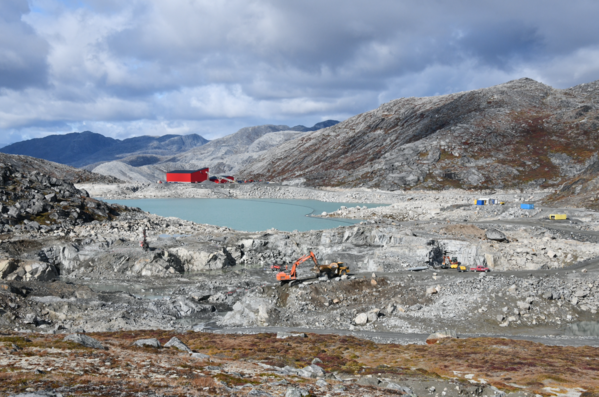
Photographer Vincent Pardieu
Origin and Story
The rubies we carry from Greenland Ruby have a documented origin in Aappaluttoq. This well-known connection to the deposit gives the jewelry a special story and allows the stone to be linked to the landscape from which it comes.
We are happy to share the information and documentation that comes with each stone.


Greenlandic Rubies at Heindorf
In our jewelry, the ruby’s red glow meets gold, silver, and organic shapes. It can serve as a small, warm accent within a larger design or stand as the piece’s central gemstone.
I love the connection between the landscape, the stone, and the craftsmanship. The ruby has its own story before it arrives at the workshop. Here, it becomes part of a piece of jewelry that continues the story for the person who wears it.
Stop by our workshop on Gothersgade in Copenhagen and experience the colors and character of Greenlandic rubies.


Spinels – Stars with a Long History
The spinel has everything that makes a gemstone catch the eye: vibrant colors, a beautiful luster, and a fascinating play of light. From delicate pinks and intense reds to violet, blue, and subtle shades of gray, it opens up a world of possibilities in jewelry.
Nature's Play of Colors
Spinel is a distinct mineral formed through geological processes deep within the Earth. Small amounts of various elements give the stones their colors. Chromium can produce red and pink hues, while iron and cobalt can produce violet and blue tones.
Spinels are found in Myanmar, Sri Lanka, Vietnam, and Tanzania, among other places. Each stone has its own unique character, ranging from soft and subdued to clear and vibrant. The cutting process brings out the stone’s color and luster, and the stone comes to life as it interacts with light.
A Hidden Gem in the Crown Jewels
For centuries, spinels were mistaken for rubies and sapphires. Their colors could be so similar that even some of the world’s most famous royal gemstones were known by other names.
One of the best-known examples is “The Black Prince’s Ruby,” which is set in the British Imperial State Crown. Despite its name, the large red stone is a spinel. It has been admired and worn for centuries—long before anyone knew what kind of gemstone it actually was.
Today, the spinel is prized for its inherent beauty and rich play of colors. A gemstone with a long history that still feels like a new discovery.
Spinels at Heindorf
At Heindorf, the many shades of spinel inspire us to create jewelry with different moods. A red spinel can add warmth and intensity, while pink, violet, and gray tones lend a softer, more subdued look.
Among other things, we use spinels in gold rings and necklaces, where they complement diamonds. We allow the stone’s color and character to interact with the metal, the organic shapes, and the jewelry’s symbolism, so that together they create a personal look.
Spinel can serve as a striking focal point or a subtle detail, its play of colors unfolding as light hits it. It is precisely this variety that makes it a constant source of inspiration in our craft.
A star in the jewel-studded sky—with millions of years under its belt.

Emeralds – Nature's Green Depths
Like the shimmering northern lights and deep volcanic lakes, the green hues of the emerald dance before our eyes. It embodies a unique blend of freshness and tranquility that captures the eye and invites contemplation. When set in a piece of jewelry, the emerald brings nature’s vibrant colors right up close.
Formed in the Earth's interior
The emerald is the green variety of the mineral beryl, which also includes the light blue aquamarine. It derives its characteristic color from small amounts of chromium and vanadium. Its shades range from vivid green to deep green tones with a hint of blue. Emeralds are found in Colombia, Zambia, and Brazil, among other places.
Many emeralds contain natural inclusions that can resemble small landscapes inside the stone. They are often referred to as the emerald’s “jardin” —the French word for garden. These internal patterns reveal something about the stone’s formation and help give it its unique character.
A gemstone with a rich history
From the ancient Egyptians and the Incas of South America to the European nobility, the emerald has been prized for its green beauty. It has adorned royal jewelry and been part of precious treasures for centuries.
Emeralds were mined in Egypt as early as several hundred years before the Common Era. Cleopatra was known for her love of this green gemstone, which was incorporated into her royal finery.
The color evokes associations with growth, hope, and renewal. Just as nature bursts into bloom every spring, the emerald can become a personal symbol of new beginnings and the things we want to nurture in our lives.
Emeralds at Heindorf
At Heindorf, we work with emeralds in both rings and necklaces. Their green color complements our organic shapes and nature-inspired jewelry.
When set in gold, the emerald is framed in a warm, rich setting, while silver and white gold highlight its cooler tones. We let the stone’s color and character contribute to the jewelry’s overall look—whether as a vibrant focal point or a small green detail that adds depth to the design.
For us, the beauty of the emerald lies both in its color and in the life you can discover inside the stone. A little garden from the earth’s core, carried with you as part of your own story.
