Materials
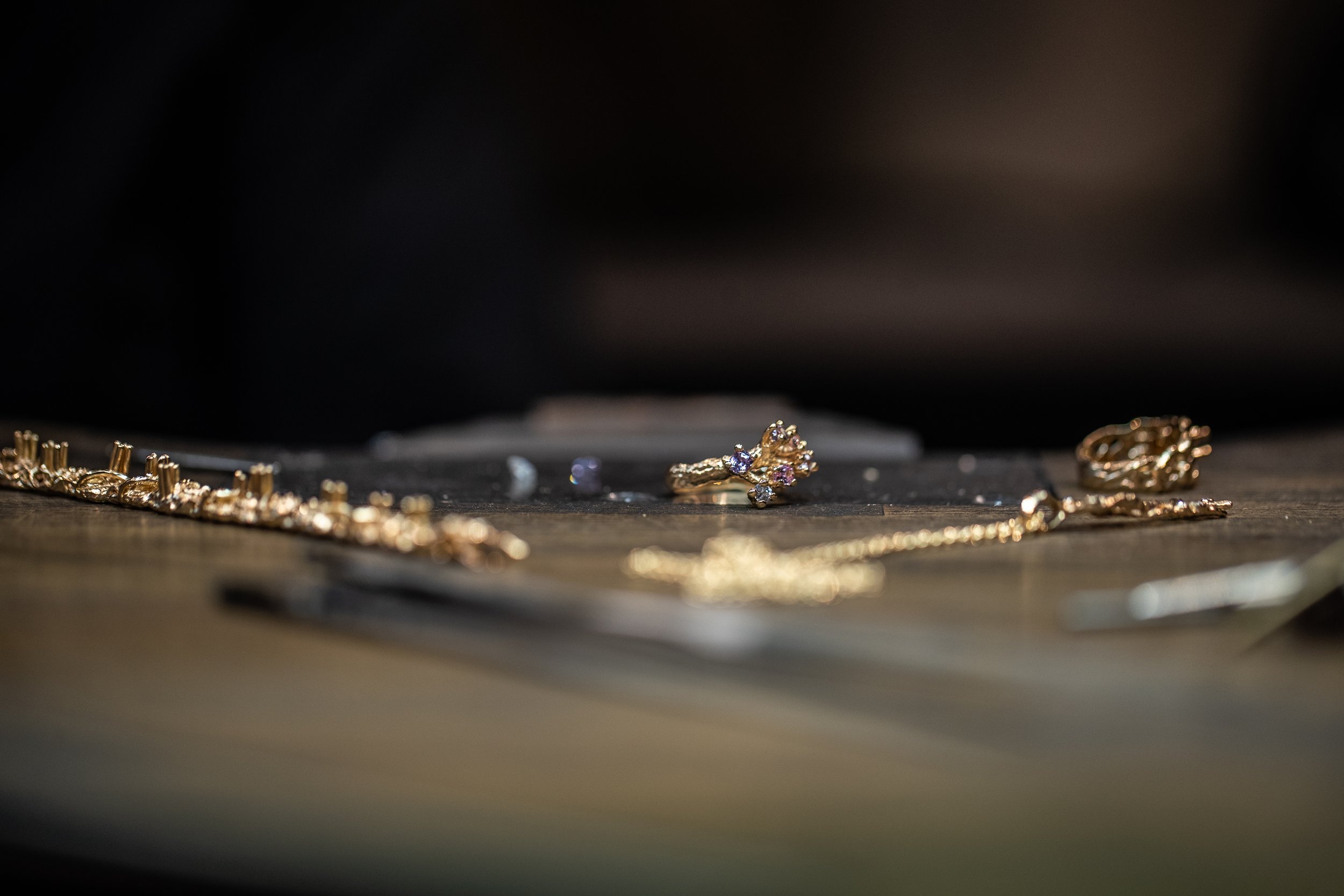
The materials are part of the jewelry’s story. The warmth of gold, the bright luster of silver, the colors of gemstones, and the soft sheen of pearls each offer their own possibilities in the craft.
At Heindorf, we select our materials with an eye for quality, character, and the person who will wear the jewelry. We work primarily with natural gemstones and have a particular fondness for the play of colors in untreated stones. We also work with treated natural stones, including Greenlandic rubies, as well as cultured pearls, which are formed in oysters with human intervention.
A New Life for Old Jewelry
An heirloom can hold memories, even if it no longer feels like it belongs to you. We can help you redesign old jewelry and incorporate its gold, silver, and gemstones into a new design, whenever the condition and properties of the materials allow.
Bring the jewelry from the drawer into the workshop. Together, we’ll explore ways to preserve what’s meaningful and give it a form you’ll want to wear.
Here you can explore the materials we work with and learn about their properties, history, and role in our jewelry.

Lecture on Materials
We regularly hold talks at the workshop, where we explore the materials used in jewelry. Topics may include gold, diamonds, colored gemstones, pearls, or other aspects of our craft.
Meet the goldsmith or one of our suppliers and hear stories about the origins of the materials, the craftsmanship involved, and the possibilities they offer in jewelry.
PRECIOUS METAL
Gold

The warm luster of gold brings to mind the light of the sun. For millennia, it has been used in jewelry and as a symbol of love, power, and belonging. At Heindorf, gold meets organic forms and personal stories—and can be given new life when an old piece of jewelry is reworked.
White gold

White gold is an alloy of gold and other metals, which gives it a light color. Its cool sheen creates a beautiful interplay with diamonds and colored gemstones. At Heindorf, we use white gold when the jewelry’s design and stones call for a light setting that highlights the weight and character of the gold.
Silver

Silver’s bright luster is reminiscent of moonlight. It can be polished to a high shine, given a soft matte finish, or patinated to bring out its indentations and details. At Heindorf, we love silver’s many expressions and the contrast it creates when paired with gold, gemstones, and organic shapes.
Platinum

Platinum is a precious metal with a naturally grayish-white color and a distinctive weight. Its light appearance provides a subtle backdrop for diamonds and colored gemstones. Over time, the surface develops a patina that becomes part of the jewelry’s history.
Precious stones
Gemstones bring the colors and history of the earth into our jewelry. From the sparkle of a diamond to the many shades of a sapphire, each stone has its own unique character.
Throughout history, people have attributed symbolic meaning to gemstones. At Heindorf, we combine color, character, and craftsmanship to create jewelry that can hold special meaning for the wearer.
Diamonds

The diamond captures the light and reflects it back in clear flashes of all the colors of the rainbow. At Heindorf, we use it as a luminous element in our organic designs—from a small, sparkling detail to a radiant centerpiece in a personalized ring.
Sapphires & Rubies

Sapphires and rubies are varieties of the mineral corundum. The red variety is called a ruby, while the other colors are called sapphires. Ranging from delicate pink and golden yellow to deep blue and fiery red, these stones lend our jewelry color, warmth, and character.
Emerald

Like the shimmering northern lights and deep volcanic lakes, the green hues of the emerald dance. Its luster and natural inclusions give the stone depth and character. At Heindorf, the emerald meets organic forms and stories of nature, growth, and renewal.
Spinels
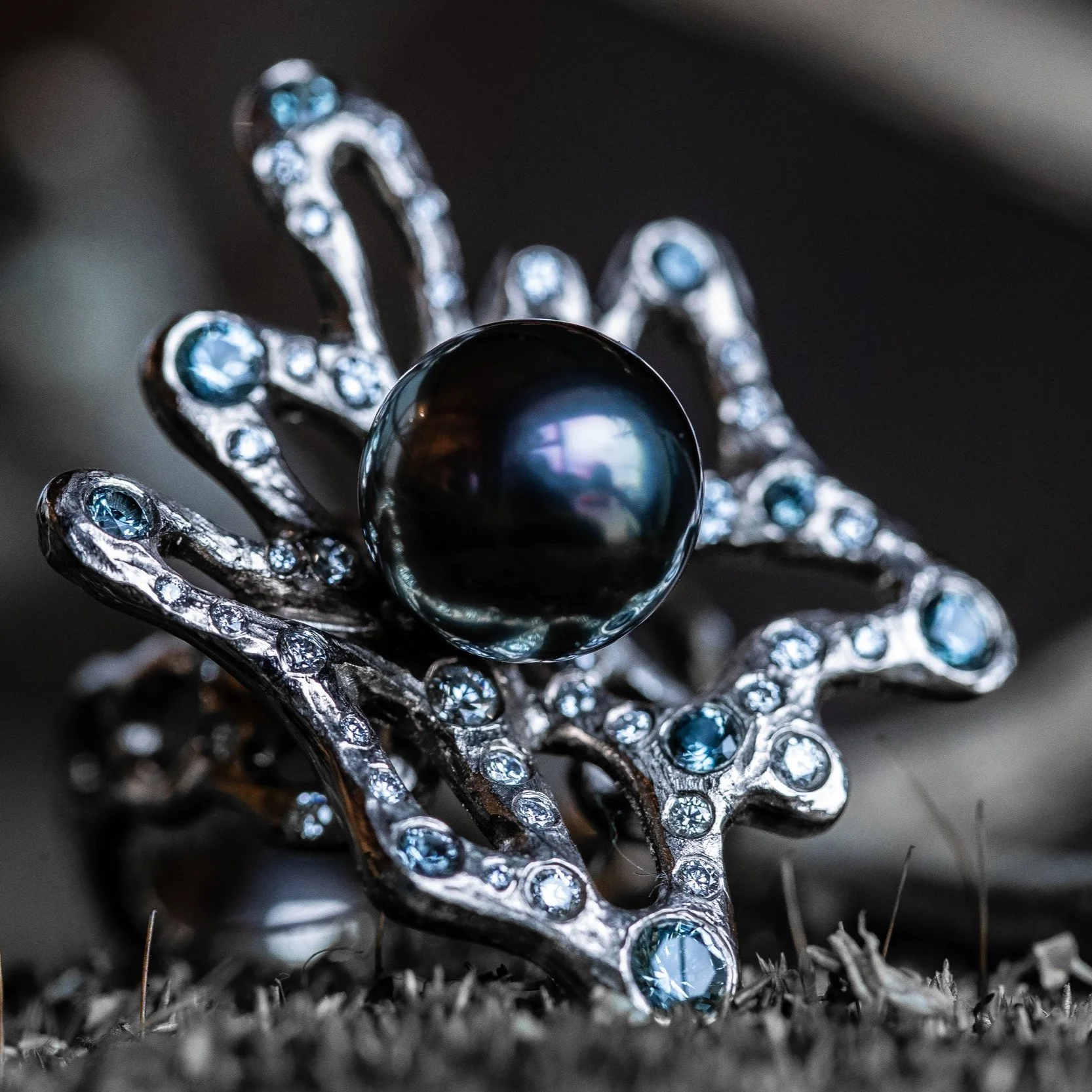
From delicate pinks and intense reds to violet, blue, and subtle shades of gray, spinel offers a fascinating play of colors. Throughout history, it was mistaken for ruby and sapphire. Today, it is prized for its own beauty—a star with millions of years under its belt.
Beads
Pearls form inside oysters and other mollusks when layers of nacre build up around an inner nucleus. Cultured pearls are formed through the same biological process, which is initiated with human intervention.
Their soft luster and variety of shapes and colors bring a special vitality to the jewelry. From nearly spherical pearls to free-form, baroque shapes, each pearl has its own unique character.
Pearls deserve gentle care. Protect them from perfume, cleaning products, and hard impacts, and gently wipe them with a soft cloth after use.
Tahitian Pearls

Tahitian pearls are saltwater cultured pearls that are particularly associated with French Polynesia. Their dark base colors can feature green, blue, violet, and silver-gray overtones. At Heindorf, we love their deep luster and the interplay between the pearls’ smooth surfaces and the organic shapes of the jewelry.
South Sea Pearls

South Sea pearls are saltwater cultured pearls that range in color from white and silver to cream and gold. They are known for their soft, rich luster and can be either round or baroque. In a piece of jewelry, they lend a sense of calm and warmth and provide a vibrant contrast to the metal.
Freshwater Pearls

Freshwater cultured pearls come in many shapes and shades, ranging from white and cream to pink and purple. Some are nearly round, while others are elongated or free-form. This variety allows us to work with both harmonious repetitions and pearls whose unique shape serves as the starting point for a piece of jewelry.
Cortez Beads

Cortez pearls are saltwater cultured pearls from the Gulf of California in Mexico. They are known for their striking luster and colorful overtones, which can range from green to violet, blue, and golden hues. Their iridescent play of color makes them fascinating to behold when they move and catch the light.
OTHER MATERIALS
Coral

Coral is formed by living organisms in the ocean and has been used throughout history in jewelry and ornaments. Its colors and soft luster give it a different look than faceted gemstones. In a piece of jewelry, coral can add warmth and a connection to the shapes of the ocean.
Amber

Amber is fossilized resin from ancient trees. With its golden hues and light weight, it holds a special connection to the history of the forest and the earth. Small inclusions and variations in clarity can reveal a whole world within the material—like a moment from nature, preserved for millions of years.
Lava

Lava forms when molten rock from the Earth’s interior reaches the surface and cools. Its porous structure and dark color give the material a raw appearance. In jewelry, lava creates a striking contrast to polished metal and sparkling gemstones—a small connection to the Earth’s volcanic forces.
Opal

The play of colors in an opal can resemble tiny landscapes of light. In noble opal, the colors can shift as the stone is moved, ranging from green and blue flashes to warm red and orange tones. Other opals have a more uniform color. Each stone offers its own possibilities in terms of the jewelry’s shape and design.
Leather
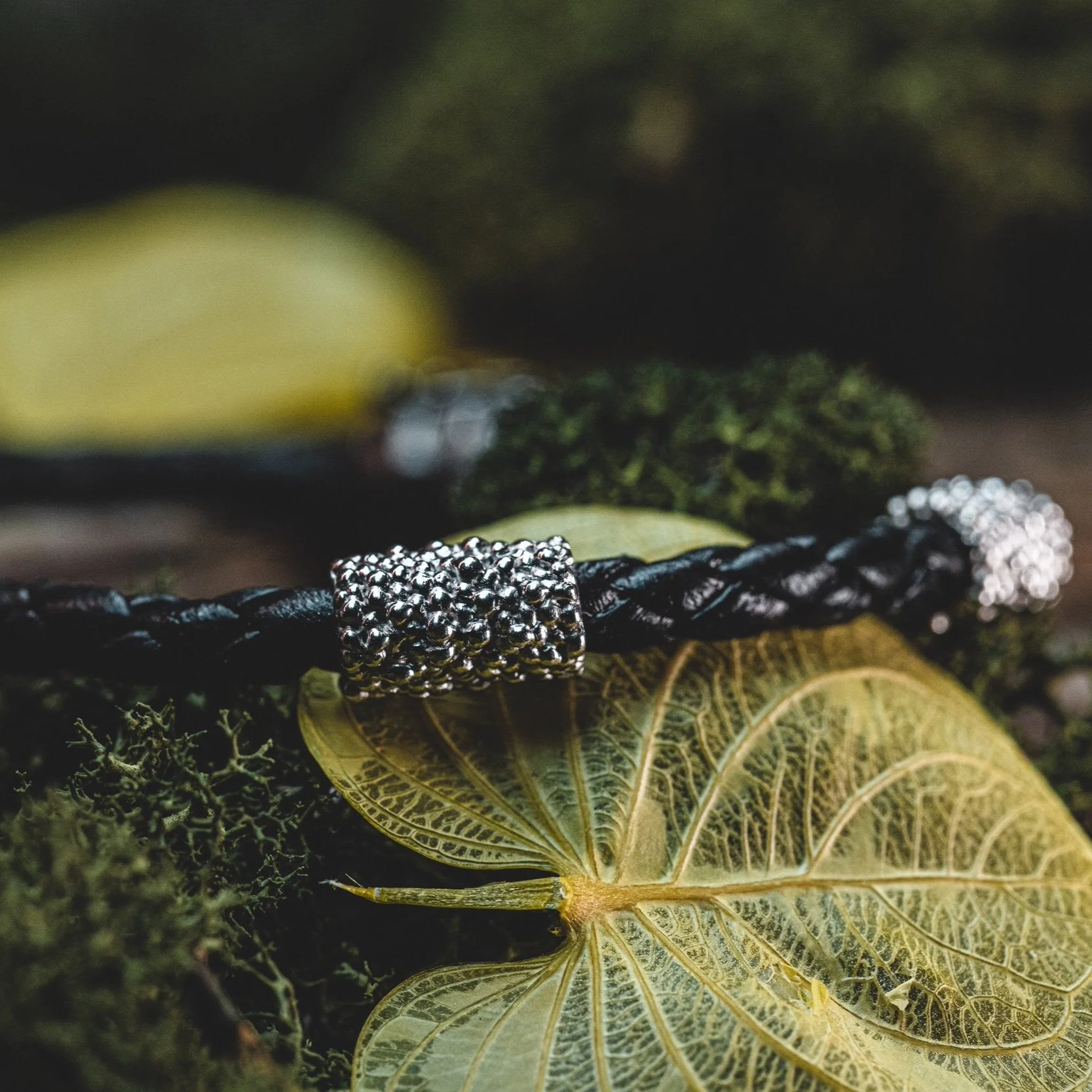
Leather gives jewelry a soft texture and a casual look. Whether used as a cord or a strap, it can create a warm contrast to precious metals and give a necklace or bracelet a different character. With use, the material develops its own patina.
Gemstone

In addition to classic gemstones, we work with gemstones whose colors, patterns, and surfaces inspire us. Some are reminiscent of landscapes, while others have a calm, uniform glow. We choose them for their character and the possibilities they offer in a piece of personalized jewelry.
.

.

Materials and Suppliers
A piece of jewelry begins long before it takes shape in the workshop. Behind the materials lies a story of how they were formed, mined, or cultivated by nature, and of the people who have worked with them.
At Heindorf, we work with select suppliers and place a high value on long-term relationships and dialogue about the materials. We are interested in their origin, how they are processed, and what information is provided about them.
Information regarding origin, processing, and traceability varies depending on the materials. Therefore, we base our assessment on the specific piece of jewelry and the documentation that is available.
You're always welcome to ask about the materials. We're happy to share our knowledge and help you choose the look that fits your preferences and your story.