
Beads
Pearls are nature’s beautiful way of protecting itself, as pearl oysters produce mother-of-pearl to prevent themselves from being damaged by incoming grains of sand.
PEARLS
Quality is our hallmark. That is why we take pride in using only the finest materials in all our jewelry. At the same time, we want to contribute to a better and more sustainable world, where fair trade is a natural part of our business.
The incredible power of nature is captured in every pearl featured in a piece of jewelry from Heindorf Jewelry.
Tahiti

Black pearls reign supreme in the darkness. Brought from Tahiti’s night sky, they possess a power that attracts both women and men. Like tiny round mirrors, they reflect light in every direction and demand attention. Some are faceted, others feature baroque shapes, and still others bear engravings that symbolize ancient tattoos. All can take possession of the night.
South Sea

The highly prized South Sea pearls come in several varieties. The gold-lipped oyster produces some stunning pearls whose color rivals that of gold itself. They come in shades of cream, yellow, and gold. The silver-lipped pearl oyster is the source of the pure, white South Sea pearls. Within its soft body, pearls are formed in shades of white, silvery white, pinkish white, and cream.
Freshwater

This type of pearl, with its oval shape, has always been overshadowed by saltwater pearls. However, techniques for cultivating freshwater pearls have gradually been perfected, making it possible to produce both baroque and round shapes in beautiful shades.
Cortez
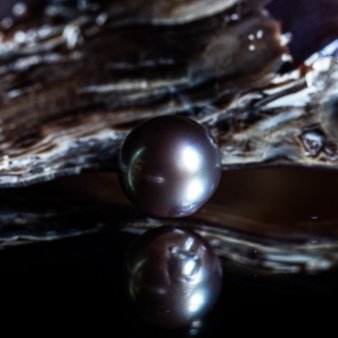
The Cortez pearl is the rarest saltwater cultured pearl in the world and is cultivated at only one farm in northwestern Mexico.
The pearls are characterized by a very intense luster and completely unique shades in all the colors of the rainbow.
A CLEAR CONSCIENCE
At Heindorf Jewellery, we are deeply committed to the materials we use, their applications, their origins, and how they are crafted. We do our best to minimize our impact on the environment. We do this by ensuring that our materials are as sustainable as possible without compromising on quality, so that the finished piece of jewelry can be worn with a clear conscience.
The materials trade is built largely on trust, which is why we only work with suppliers we trust. Our suppliers work closely with the people who work in the mines or out on the pearl farms. They travel out there, are involved in the process, and know how the work is done. They ensure quality and help ensure that the workers’ lives are healthy and decent, and as a business, we want to support that. We get materials of the highest quality—with a clear conscience.

ECO-FRIENDLY BEADS
We work closely with Marc'Harit regarding pearls. Pearls are nature’s beautiful way of protecting itself, as pearl oysters produce mother-of-pearl to prevent damage from invading grains of sand.
These shimmering treasures from the depths need to be cared for, or they’ll lose their luster and become dull. But as soon as they come into contact with bare skin, their natural shine returns.
The pearl is one of the oldest gemstones in the world, and it was discovered by some of the earliest humans in their search for food. Ever since, the pearl’s history and beautiful luster have captivated us—humans and pearls have always been closely connected.
In the cultivation of sustainable cultured pearls, efforts are made to create favorable conditions for everyone involved—nature, the ocean, and the people who work on the farms. In French Polynesia, where the beautiful Tahitian pearl is cultivated, pearl farms are subject to government regulations designed to protect natural and aquatic environments, a practice also followed in Australia. In Indonesia, the Philippines, and Mexico, where white, golden, and Gold South Sea pearls, as well as Cortez pearls, are cultivated, respectively, there are no regulations from any authorities regarding either environmental or labor conditions. However, a few pearl farms have taken the lead in cultivating sustainable pearls, and it is precisely these pearl farms that our supplier works closely with.
So what exactly is a sustainable pearl? Well, just as gemstones can be heat-treated to change their color, pearls can also be treated to give them a new color or a different luster. With a sustainable pearl, neither the color nor the luster is altered. The pearl appears exactly as it does when it is taken from the oyster—created by nature itself.
If you’d like to read more and learn more about beads, we recommend visiting our supplier’s website:https://marcharit.com

LECTURE
We regularly host lectures at the workshop, covering a variety of topics and featuring different speakers. These may focus on gold, diamonds, rubies, sapphires, pearls, or whatever is currently in the spotlight. The speaker might be the goldsmith himself or one of our suppliers, who will share stories about their travels, their work, and much more.
Sign up for our mailing list if you're interested in attending one of the lectures.

Cortez Beads
Personally, I have a special fondness for the beautiful Cortez pearls. My passion for Cortez pearls began in 2022, when I introduced them here in my studio. The pearls have a very intense luster and some truly unique shades in all the colors of the rainbow.
Cortez pearls are considered the rarest saltwater cultured pearls in the world and are cultivated at a single farm in northwestern Mexico. Production is limited to just under 4,000 pearls annually, of varying quality, of which only the best are selected for export. Furthermore, all pearls and mabe pearls are 100% sustainable.
The Cortez cultured pearl is found in the rainbow-lipped pearl oyster“Pteria sterna”. A mussel whose anatomy makes it very difficult to use for pearl cultivation. Despite this, three biologists have succeeded in completing many years of effort, allowing us to now present this unparalleled beauty among pearls.
The Cortez pearl is characterized by a very intense luster and truly unique hues that span the entire spectrum of the rainbow. The pearls have a dark or light gray base tone, complemented by an overtone in one or more of the rainbow’s colors, where green, purple/lavender, pistachio, pink, blue, brown, or golden are just a few examples. Certain colors may bring to mind Tahitian cultured pearls, which also fascinate with their natural multicolored hues; however, the play of colors is likely even more nuanced and subtle in the Cortez pearl.
The rainbow-lipped oyster is slightly smaller than the black-lipped oyster, in which Tahitian cultured pearls are cultivated, and the Cortez pearl is therefore limited in size to between 8 and 12 mm.
Our pearl supplier, Marc’Harit, is Europe’s sole distributor of Cortez cultured pearls.

Tahitian pearls
Black pearls reign supreme in the darkness. Brought from Tahiti’s night sky, they possess a power that attracts both women and men. Like tiny round mirrors, they reflect light in every direction and demand attention. Some are faceted, others feature baroque shapes, and still others bear engravings that symbolize ancient tattoos. All can take possession of the night.
The black-lipped pearl oyster (Pinctada margaritifera) is found naturally in the lagoons of the French Polynesian atolls. “Tahitian pearls” are named after the largest of the French Polynesian islands, Tahiti. The beautiful mother-of-pearl gives the pearls an exceptional luster—and combined with the unique natural hues, it makes the pearl stand out with a very special intensity.
Tahitian pearls also stand out from other pearls due to their shape and size. The shapes are endless in Baroque and Semi-Baroque styles. At the same time, they range from pearls with circular patterns to beautiful teardrops and perfectly round shapes. Along with the lighter South Sea cultured pearls, Tahitian pearls are among the largest in the world—ranging from 8 to 16 mm, with some reaching up to 20 mm.
The Tahitian pearl, with its dark, intense luster, is said to be a mirror in which both the wearer and the outside world can see themselves reflected. There is also a symbolism associated with the Queen of the Night, in which the unconscious and our dreams shimmer in an alluring way.
Pearls that are both masculine and feminine.
Since Tahitian pearls came into fashion, more and more men have also begun to wear them. For a long time, pearls had otherwise been reserved primarily for women. With its dark hues, the Tahitian pearl has an impressively masculine look. If you visit Tahiti, you’ll see the island’s residents—men and women, young and old alike—wearing these precious stones with pride.

South Sea pearls
…Or, as it is also known, the “Queen of Pearls,” for it is truly a thing of beauty with its deep yellow color, which can almost make anyone wonder whether they are holding a pearl or a piece of gold in their hand. Conversely, they can also be pure white with an almost silvery sheen; it hardly gets any more regal than when nature can mirror the precious metals. South Sea cultured pearls come from either the silver-lipped or gold-lipped oyster, but don’t be fooled by the names—the silver-lipped oyster, in addition to white, can also produce pearls that are more cream, white-pink, white-silver, and silver-blue, and occasionally these colors may overlap with a few yellow ones. Similarly, the gold-lipped oyster can produce a few white pearls, but, like the silver-lipped oyster, it also produces cream-colored pearls and, of course, yellow and gold-colored pearls.
South Sea cultured pearls are cultivated in northern Australia, the Philippines, Indonesia, and Myanmar. Each country or region produces the highest yield of a specific color—in Australia, most of the white South Sea pearls are harvested. In Indonesia and the Philippines, yellow and golden pearls are the most common, and Myanmar is known for occasionally harvesting white pearls with a pinkish tint.
The giant pearl oyster, known in Latin as Pinctada maxima, is the largest pearl oyster of all. It can grow up to 35 cm and live for 35–40 years. With such a large oyster, some large pearls are also produced—the most common are between 9–18 mm and can reach up to about 20 mm. Exceptionally, baroque South Sea pearls have been found as large as 45 mm. The shapes of the pearls are varied, and each has a unique character; they are, of course, available as round, and the baroque ones have just been mentioned, but they also come in semi-baroque, oval, bouton, off-round, teardrop, circled, and, of course, keshi (see definition in the section on keshi).

Freshwater pearls
This type of pearl, with its oval shape, has always been overshadowed by saltwater pearls. However, techniques for cultivating freshwater pearls have gradually been perfected, making it possible to produce both baroque and round shapes in beautiful shades.
More than three thousand years ago, the Chinese were already aware of the mussel’s ability to produce mother-of-pearl. Freshwater cultured pearls were originally known as Biwa pearls, as they were cultivated in Lake Biwa in Japan. These pearls were characterized by their small size and rice-grain-like shape, with a whitish hue.
Today, the majority of the world’s freshwater cultured pearls are produced in China. Cultivation methods can vary greatly, which means that the quality of freshwater cultured pearls varies widely. As a result, many freshwater pearls are available at relatively low prices. However, some producers have focused on refining their cultivation methods, similar to those used for saltwater cultured pearls, so that today it is also possible to obtain quite fine freshwater cultured pearls. It is still relatively difficult to produce fine, round freshwater cultured pearls, which is why these can also command a very high value.
In terms of shape, freshwater pearls are generally more “potato-shaped” or oval—but they can also be teardrop-shaped or round. Baroque freshwater cultured pearls are intentionally cultivated baroque pearls—unlike saltwater cultured pearls, where the baroque shape occurs by chance.
In their natural colors, they come in shades of white, lavender, pink, and peach. Freshwater cultured pearls are also available in many other colors; however, it is important to note that these other colors are always dyed.
Standard sizes for freshwater pearls range from as small as 2 mm up to 10 mm. However, recent research into pearl sizes has shown that pearls larger than 20 mm can also be found. Above 10 mm, perfectly round pearls become very rare.

AKOYA CULTURED PEARLS
In 1904–1907, Japanese entrepreneur Mikimoto Kōkichi began cultivating pearls—in other words, an attempt to grow pearls in pearl oysters by implanting a nucleus. His countless experiments eventually bore fruit, and the first pearls to emerge were Akoya cultured pearls. Many people recognize these pearls as the classic round white pearl.
In addition to Japan, Akoya cultured pearls are produced on a large scale in China, Korea, and, most recently, Vietnam, where a wide variety of stunning natural colors can be found.
The size of individual pearls varies depending on where in the world they come from, but the most common size is between 4 and 8 mm. They are also found as small as 2–4 mm and as large as 8–10 mm, though these are less common, and it is rare to find any as large as 10–12 mm. As mentioned, the Akoya cultured pearl is what is commonly known as the classic, white, round pearl, but in fact, the pearl can also have irregular shapes, which are technically referred to as baroque and keshi (see definition in the section on keshi). Likewise, the pearls are not only available in white but also in cream, white-pink, white-bluish, silver, yellow, and pistachio—all of which occur naturally in the oyster.
Surface Treatment of Beads

Engraved Tahitian pearls
The beautiful dark Tahitian cultured pearls from French Polynesia are a favorite here at Heindorf Jewellery. Tahitian pearls have a nacre layer that is at least 0.8 mm thick—usually thicker—which makes it possible to engrave and polish the pearl’s surface.
The patterns engraved on the beads are inspired by traditional French Polynesian tattoos, and you will often see the same designs in both tattoos and beads. Many people also refer to these beads as “tattooed beads.” The beautiful motifs illustrate the people’s connection to nature, the ocean, wildlife, and their mythology. You’ll find patterns featuring stingrays, lizards, turtles, and waves, but the most well-known is Tiki, who is said to be the first man on Earth according to Polynesian mythology and is today regarded as a spiritual protector.
The engravings are done by hand by engravers, and the thicker the mother-of-pearl, the more pronounced the engravings can be. And, of course, depending on the engraver’s skill and the size of the pearl, patterns of varying levels of detail can be created.

Patterned beads
If you’re into the visual aspect, there are also what are known as patterned pearls. These are also Tahitian cultured pearls, but their patterns are more abstract yet still quite recognizable. Their surfaces may resemble seashells, acorns, tulips, or something entirely different—only your imagination sets the limits with these pearls.

Faceted beads
Last but not least, there are also faceted pearls. People often think that only gemstones have facets, but think again—in fact, all cultured pearls can be faceted, as long as the nacre layer is thick enough. Just like on gemstones, the facets help the pearls catch the light and reflect small, beautiful flashes—adding something extra to these beautiful treasures from the sea.


